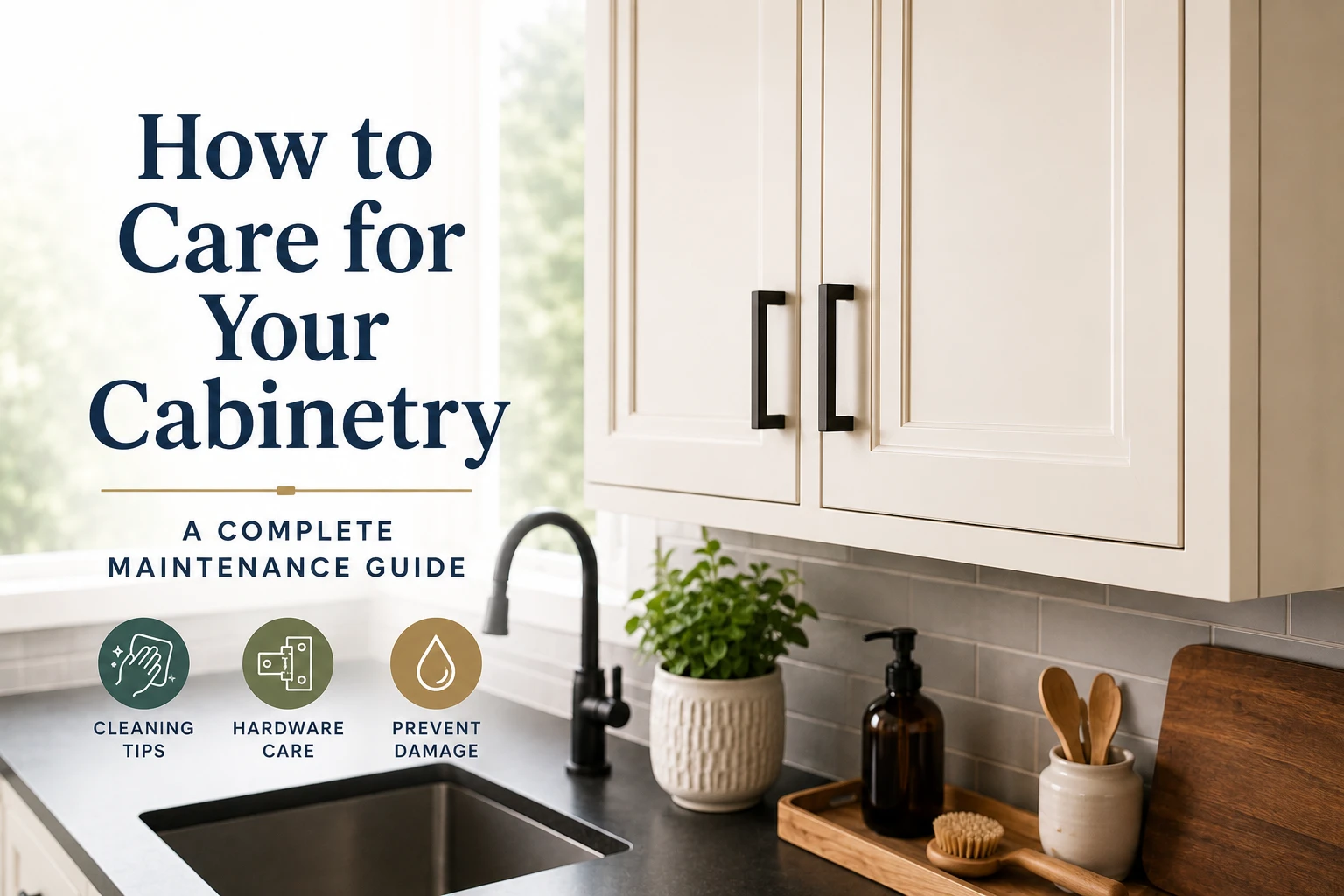
Custom cabinetry is one of the most significant investments you’ll make in your home, and quality cabinets are built to last 30 years or more.
But here’s what most cabinet care articles won’t tell you: the advice is almost always the same recycled list of tips, and some of it is wrong. As specialists in custom kitchen remodeling, we’ve seen exactly where cabinets fail in real homes, and it’s rarely where homeowners expect.
This guide covers the fundamentals of cabinet care, but it also covers the things we wish every client knew on day one: why your finish is vulnerable in its first month, why your dishwasher is quietly attacking the cabinet next to it, and why the cabinet under your sink dies first.
While the guidance below applies to most quality custom cabinetry, always review and follow the care instructions provided by your cabinet manufacturer. Manufacturer-specific recommendations take precedence and may include approved cleaning products, maintenance requirements, and warranty conditions unique to your cabinetry.
The First 30 Days: Let Your Finish Cure
If your kitchen remodel just wrapped up, congratulations — and hands off, at least a little.
Painted finishes and the catalyzed varnishes used on quality custom cabinets continue hardening for weeks after they’re applied. A finish can feel dry to the touch within hours but takes up to 30 days to reach full hardness.
During that cure window, treat your cabinets gently. Don’t scrub them, don’t attach anything adhesive to the doors, don’t hang anything over door tops, and wipe spills with a soft dry cloth rather than cleaners.
We’ve seen brand-new kitchens develop dull spots and surface marks in the first month that the homeowner assumed were quality defects. They weren’t — the finish simply hadn’t finished curing.
A few weeks of patience protects decades of beauty.
Everyday Cleaning: Simpler Than You Think
Once your finish has cured, routine care is genuinely easy.
The single most important habit is wiping up spills the moment they happen, especially around the sink, dishwasher, and cooktop where moisture exposure is highest. Liquids left to sit penetrate finishes, stain wood, and swell seams and edges.
For regular cleaning, all you need is a soft, lint-free cloth dampened with warm water and a few drops of mild dish soap. Wipe in the direction of the wood grain, rinse with a clean damp cloth, and dry immediately.
Never spray anything directly onto cabinet surfaces, and never use a dripping-wet cloth. Gentle and consistent beats aggressive and occasional, every time.
Skip the Vinegar (Yes, Really)
Search “how to clean kitchen cabinets” and nearly every article recommends a 50/50 vinegar and water solution.
We’re going to break ranks here: don’t do it.
Vinegar is acidic, and repeated use can dull and etch wood finishes over time. And here’s the irony — once vinegar is diluted enough to be safe, it’s no more effective than plain dish soap. So you’re taking on risk for zero benefit.
The same skepticism applies to other popular shortcuts:
- Magic Erasers are micro-abrasives that will burnish and dull painted doors.
- Ammonia, bleach, and powdered cleansers strip protective topcoats.
- Silicone-based polishes and waxes build up into a hazy film that attracts dust and makes future refinishing nearly impossible.
Modern cabinet finishes don’t need polish at all.
For stubborn grease near the range, warm water with a slightly higher concentration of dish soap, a minute of dwell time, and light pressure will handle almost anything. Test any new cleaner inside a door first.
Your Dishwasher Is Attacking the Cabinet Next to It
Here’s a failure point we see constantly that almost no one warns homeowners about: steam.
When your dishwasher vents at the end of a cycle, that hot steam rises directly against the edge of the adjacent cabinet and the underside of your countertop. Over months and years, it peels finishes, swells panels, and lifts veneers — damage that looks like a defect but is really a habit problem.
How to Prevent Steam Damage
The fix is simple:
- Wait 20 to 30 minutes before opening the dishwasher after a cycle.
- Or crack the door and let steam dissipate away from cabinet faces.
The same principle applies to countertop appliances:
- Kettles
- Rice cookers
- Slow cookers
- Coffee makers
When in use, pull them to the counter’s edge or slide them out from under upper cabinets entirely.
While you’re at it, always run your range hood while cooking. Ventilation removes heat and airborne grease before they ever reach your cabinetry.
The Sink Base Is Where Cabinets Die First
Ask any remodeler which cabinet fails first in a kitchen, and you’ll get the same answer: the sink base.
A slow drip from a P-trap, a weeping supply line connection, or a garbage disposal gasket can leak for months before anyone notices. By the time you smell mustiness or see a sagging cabinet floor, the damage is done.
Two Habits That Prevent Costly Damage
1. Install a Waterproof Under-Sink Mat
Put a waterproof under-sink mat or tray in the sink base. A few dollars of protection catches drips and makes leaks visible before they soak in.
2. Inspect Plumbing Twice a Year
Twice a year:
- Empty the cabinet.
- Inspect plumbing with a flashlight.
- Run the water.
- Check every connection for moisture.
- Look at cabinet floor corners for staining or swelling.
Five minutes of inspection can save you a cabinet replacement.
How to Fix a Sagging or Rubbing Door Yourself
Most cabinet care articles tell you to “tighten loose hinges” and stop there.
But modern soft-close hinges are precision hardware with three separate adjustment screws, and learning them turns you into your own service technician.
Side-to-Side Adjustment
The screw closest to the door edge adjusts the door side to side.
Use it when:
- A door rubs against its neighbor.
- A door sits crooked.
In-and-Out Adjustment
The screw at the back of the hinge arm moves the door in and out from the cabinet face.
Use it when:
- A door sits proud.
- A door won’t close flush.
Up-and-Down Adjustment
The screws mounting the hinge plate to the cabinet adjust the door up and down.
Use them when:
- A door has sagged.
- Gaps appear uneven.
Adjustment Tips
- Make quarter-turn adjustments.
- Close the door and check progress after each adjustment.
- Tighten hardware screws twice a year.
Wood moves with the seasons, so slight door misalignment is normal, not a defect.
Your Wood Will Change Color — and That’s Normal
Natural wood is a living material, and it develops a patina over time.
Common Wood Color Changes
- Cherry darkens dramatically and richly during its first year or two.
- Walnut lightens.
- Maple and oak mellow toward amber tones.
This isn’t fading or failure — it’s character, and it’s part of why people choose real wood.
Prevent Uneven Patina
A cutting board left leaning against the backsplash for a year can leave a lighter “shadow” behind it.
The same goes for:
- Canisters
- Stand mixers
- Artwork hung on cabinet ends
Rotate countertop items occasionally, especially during the first year, so your wood ages evenly.
Protect Against Sunlight and Humidity
If your kitchen gets strong direct sun:
- Install UV-filtering window film.
- Use simple window treatments.
Also maintain indoor humidity between 35% and 50% year-round.
- Use a humidifier during winter.
- Use air conditioning during summer.
Stable humidity minimizes seasonal swelling and shrinking that loosens joints and cracks painted seams.
What Actually Voids Your Warranty
Cabinet warranties protect against genuine defects, but they typically exclude damage caused by improper care.
Common Warranty Violations
- Harsh or abrasive cleaners
- Magic Erasers
- Silicone polishes
- Prolonged moisture exposure
- Unaddressed leaks
- Steam damage
- Wet towels hung over door tops
- Self-cleaning oven cycles run with adjacent cabinet doors closed
Protect Your Coverage
- Keep your cabinet care guide.
- Use recommended products.
- Ask questions before experimenting with unfamiliar cleaners or maintenance methods.
If a genuine defect appears, documented proper care makes the warranty process much smoother.
Keep a Touch-Up Kit on Hand
Even careful households collect the occasional scratch or chip.
For Stained Wood Cabinets
Use:
- Fill sticks
- Touch-up markers
Matched correctly, they can make small blemishes nearly invisible.
For Painted Cabinets
Ask your remodeler for a touch-up kit in your exact finish. Most custom cabinetry shops provide one, and it’s worth requesting at installation.
When to Call a Professional
Professional repairs are usually the best option for:
- Deep gouges
- Lifting veneer
- Water damage
Early repairs are almost always simpler and less expensive.
And if your doors and finish are beyond saving but your cabinet boxes remain solid, cabinet refacing can provide a brand-new look at a fraction of the cost of replacement.
Your Seasonal Checklist
A few times each year, spend an hour on preventative maintenance.
Seasonal Cabinet Maintenance Checklist
- Empty and vacuum cabinet interiors.
- Clean grease buildup from the tops of wall cabinets.
- Inspect sink base plumbing.
- Check around the dishwasher for moisture damage.
- Tighten and adjust hardware.
- Touch up scuffs and scratches.
Small problems caught early stay small.
Protect the Investment, Love the Kitchen
Beautiful custom cabinetry deserves care that matches the craftsmanship that built it — and now you know the things most homeowners learn the hard way.
If your cabinets are showing wear that cleaning can’t fix, or you’re ready to design a kitchen with custom cabinetry built for how you actually live, browse our kitchen portfolio for inspiration, then contact us today for a consultation.